

Exploring Old Pune: A Heritage Walk Through the Historic City
Pune is a city where history comes alive in its narrow lanes, old neighbourhoods and centuries-old temples. While the city has grown into a bustling IT and educational hub, its historic heart still retains the charm of the Maratha era.
Being a resident for many years, I decided to explore Old Pune on foot, taking myself on a heritage walk through some of its most significant historical and cultural landmarks. Rather than hiring a professional guide, I chose to discover the city at my own pace, stopping wherever something caught my attention.
How to Reach
For anyone planning to explore Pune’s historic city centre, I would recommend using the metro. It is a convenient way to travel within the city and avoid the traffic and parking hassles, particularly around the old city.
I took the Purple Line of Pune Metro and got off at Kasba Peth Metro Station, which is conveniently located for exploring the historic neighbourhood. From the station, I made my way towards Shaniwar Wada, the starting point of my heritage walk. Its an an 8-minute walk. However, I opted for an auto-rickshaw ride.
The metro provides easy access to several of the city’s historic attractions, making it a practical option for visitors who want to explore Old Pune on foot.
Here are the highlights of my walk through the historic old city.
Shaniwar Wada – The Legacy of the Peshwas
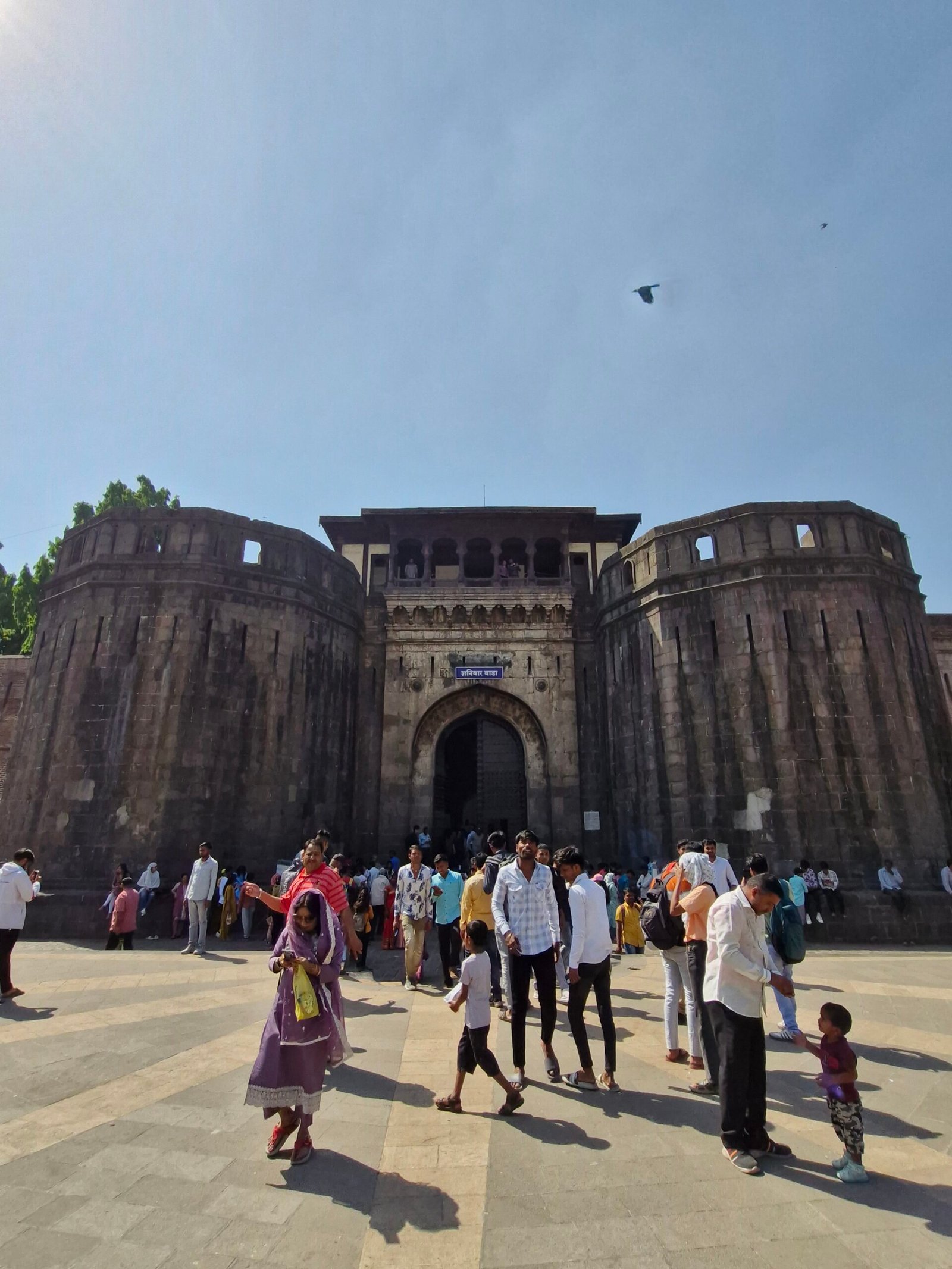
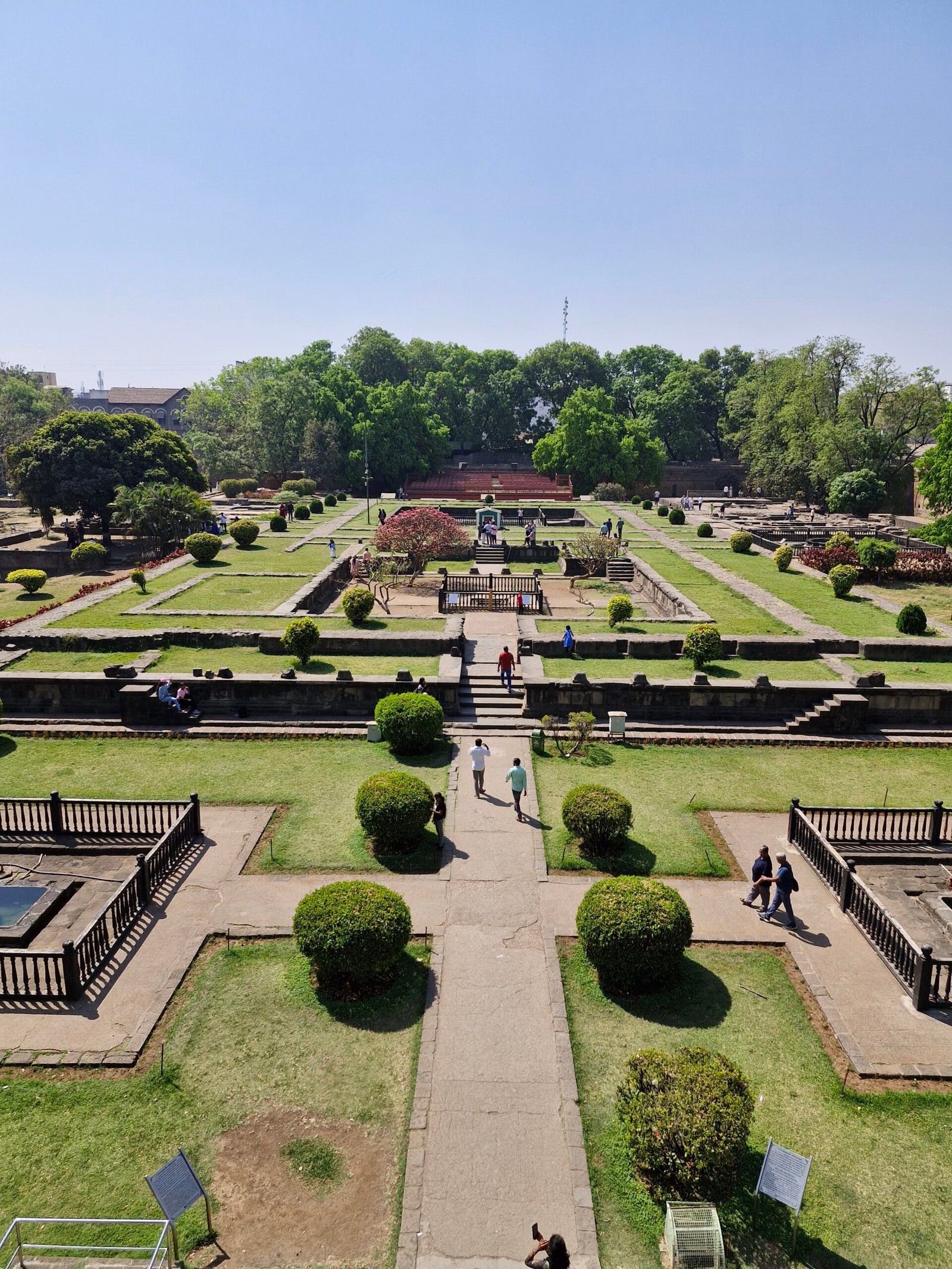
I began my heritage walk at Shaniwar Wada, one of Pune’s most iconic historical landmarks. Built in 1732, this magnificent fortification once served as the principal residence of the Peshwas, the prime ministers of the Maratha Empire.
Although much of the original palace was destroyed by a fire in 1828, the imposing fortification walls, massive gateways and bastions still stand as reminders of its glorious past.
Walking through its historic entrance, I could only imagine the grandeur of the palace during the height of the Peshwa rule. Shaniwar Wada remains an essential stop for anyone interested in Pune’s history.
Lal Mahal – Tracing the Childhood of Shivaji Maharaj
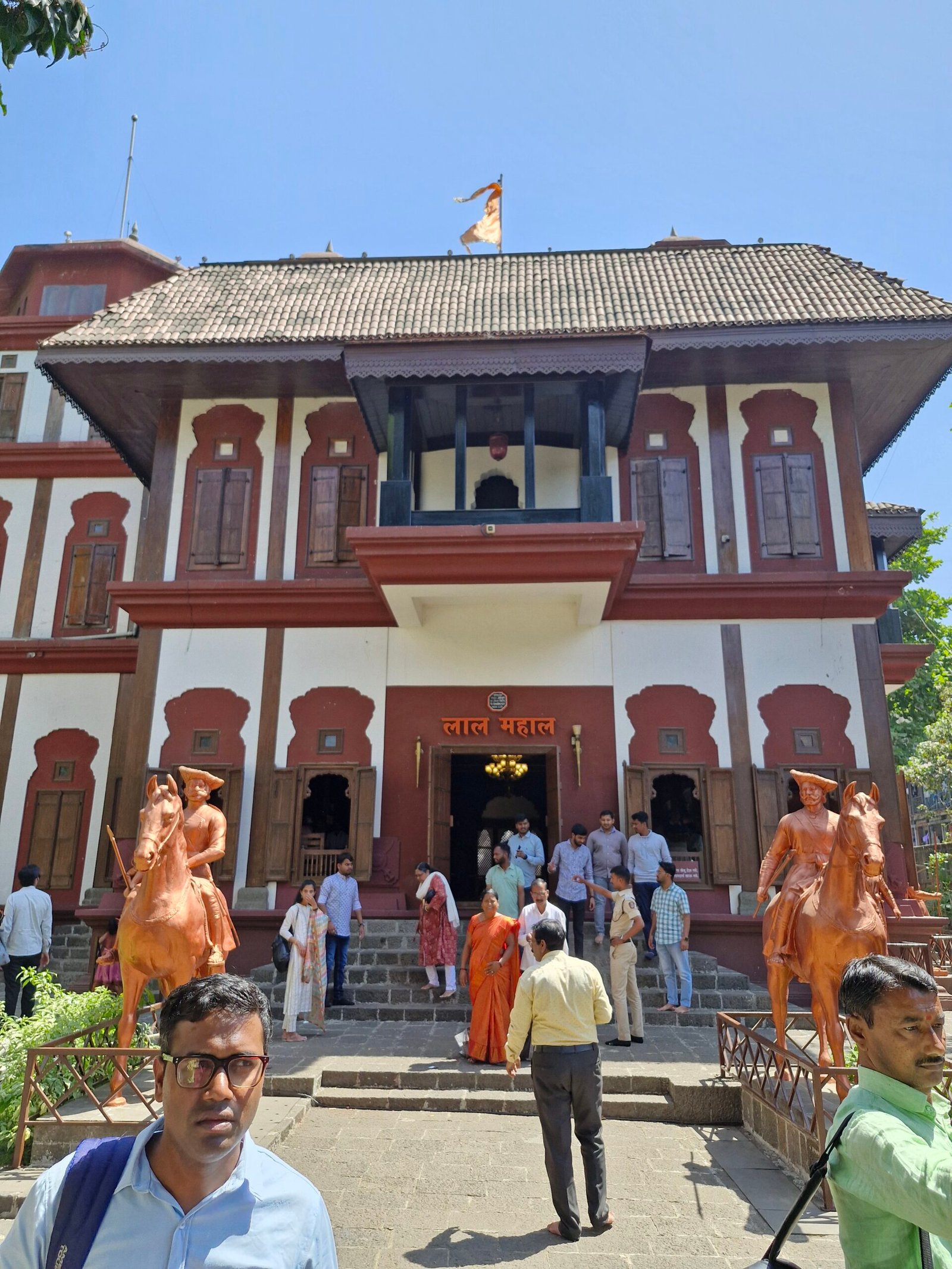
A short walk from Shaniwar Wada brought me to Lal Mahal, another important landmark in Pune’s history.
This red-coloured palace is closely associated with Chhatrapati Shivaji Maharaj, who spent a significant part of his childhood here with his mother, Jijabai. The original Lal Mahal was built by Shahaji Raje Bhosale in the 17th century.
Though the present structure is a reconstruction, it offers visitors a glimpse into an important chapter of Maratha history.
Kasba Ganpati – The City’s Presiding Deity
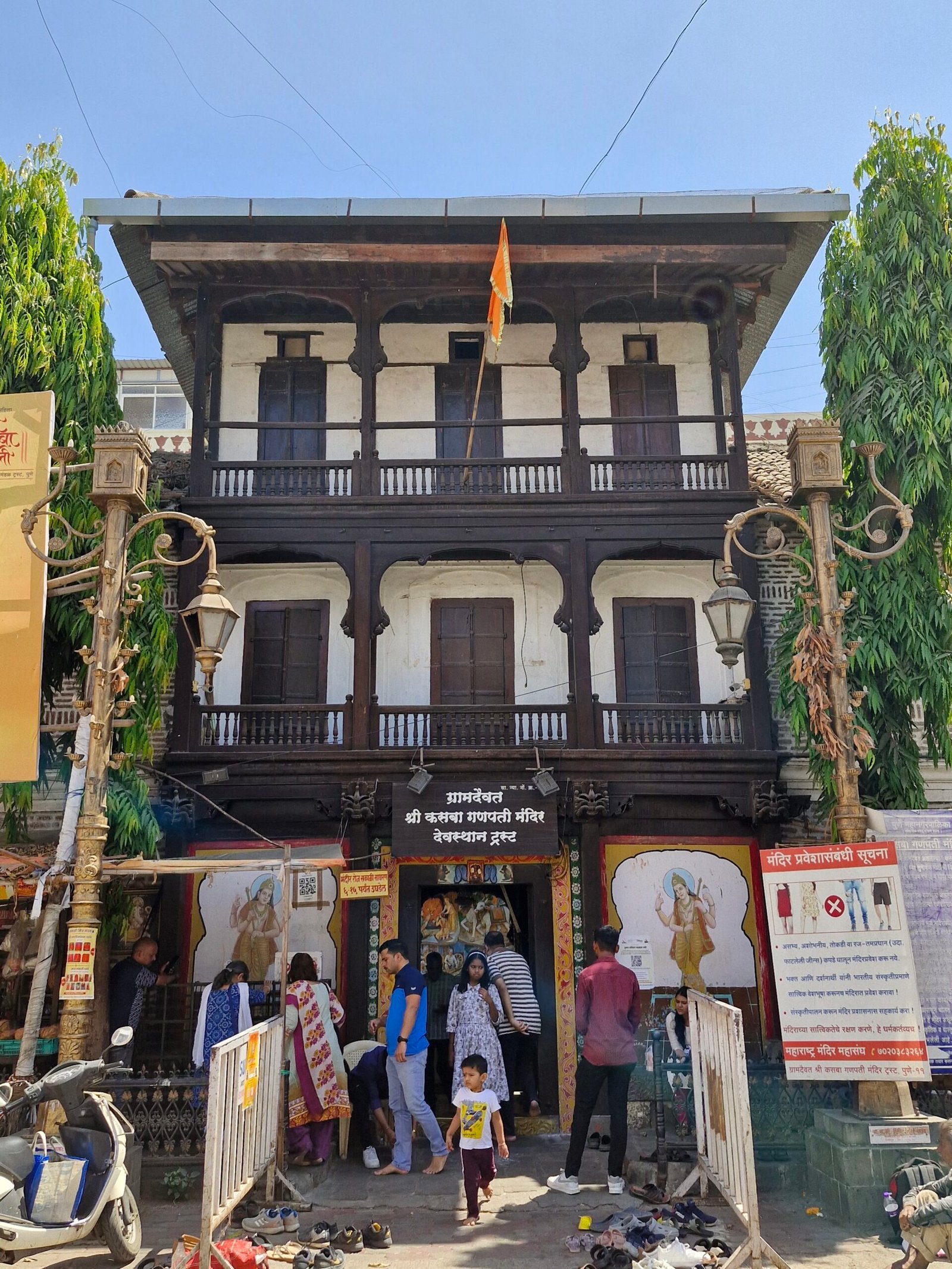
My next stop was Kasba Ganpati Temple, one of the oldest and most revered temples in Pune.
The temple is particularly significant because Kasba Ganpati is regarded as the Gramdaivat, or presiding deity, of Pune. Its importance grew during the time of Shivaji Maharaj and Jijabai.
The temple is an integral part of Pune’s cultural identity, especially during Ganesh Chaturthi celebrations.
Nana Wada – A Glimpse into Peshwa-Era Architecture
From Kasba Ganpati, I continued towards Nana Wada, another important heritage structure in the old city.
Built in the late 18th century, Nana Wada is associated with Nana Phadnavis, one of the most influential statesmen of the Maratha Empire. The wada is a fine example of traditional Peshwa-era residential architecture, with its wooden pillars, traditional courtyards and distinctive architectural features.
Walking through this historic property offers a glimpse into the lifestyle and architectural traditions of Pune during the Peshwa period.
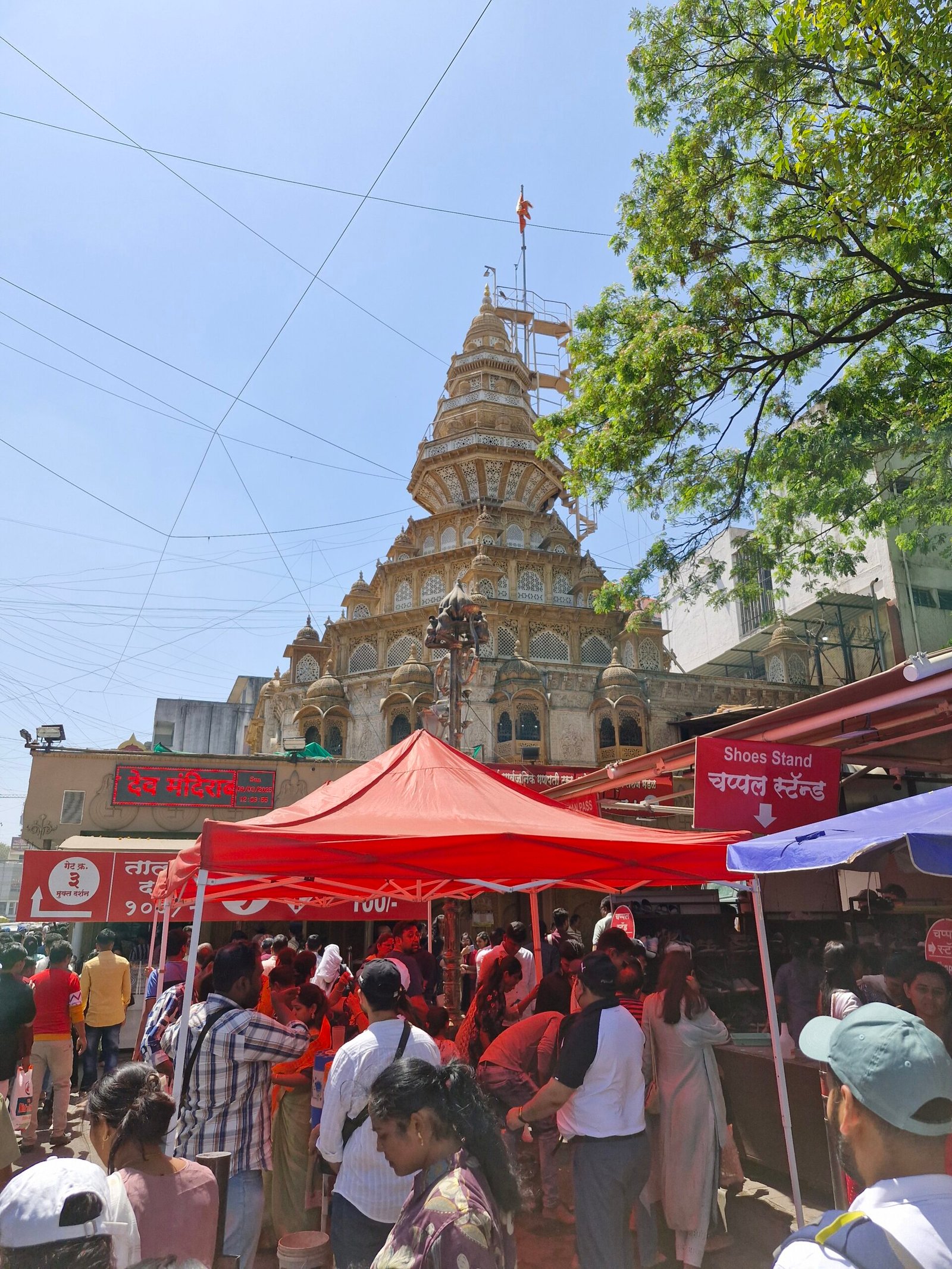
Dagdusheth Halwai Ganpati Temple – An Icon of Pune
No heritage walk through central Pune would be complete without visiting the famous Shrimant Dagdusheth Halwai Ganpati Temple.
Located near Hutatma Chowk, this is one of the most popular Ganpati temples in Maharashtra. The temple is renowned for its beautifully decorated idol of Lord Ganesha and attracts devotees from across the country.
Despite the crowds and the busy surroundings, I found the temple to be an impressive landmark and an important part of Pune’s religious and cultural landscape.
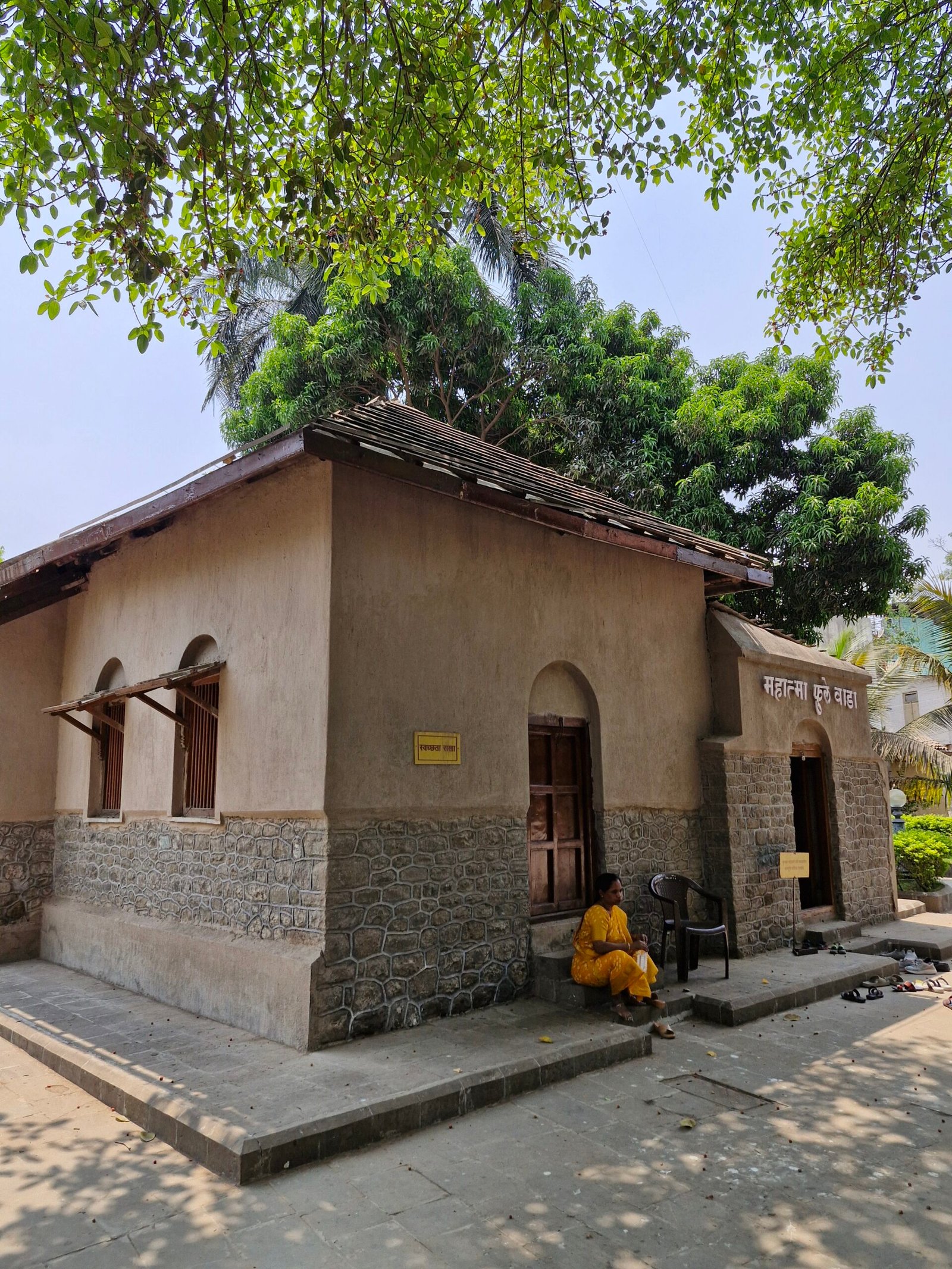
Mahatma Phule Wada – A Landmark of Social Reform
From the temples, I continued towards Mahatma Phule Wada, the former residence of Mahatma Jyotiba Phule and his wife, Savitribai Phule. This is slightly off the way and I had to take a short auto-rickshaw ride to get there.
Unlike the grand forts and temples I had visited earlier, this place tells a different but equally important story about Pune’s past.
Jyotiba and Savitribhai Phule were pioneers of social reform and women’s education in India. They worked tirelessly to challenge caste discrimination and promote education among women and disadvantaged communities.
One of the most significant features of the wada is its well, which the Phules opened to people from lower castes who were traditionally denied access to public water sources.
Standing here, I was reminded that Pune’s heritage is not just about its rulers, forts and temples. It is also about the people who challenged social inequalities and helped shape modern India.
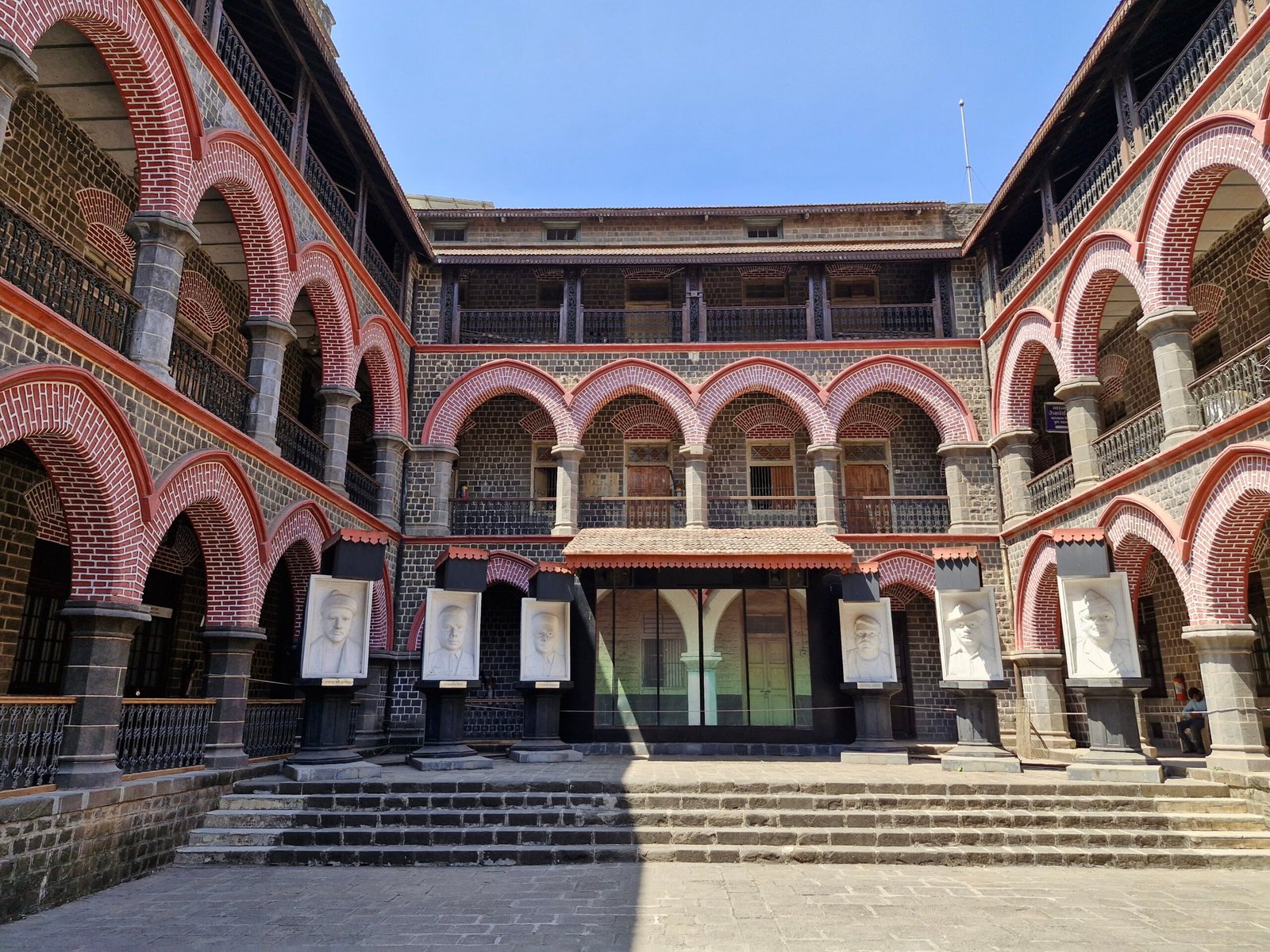
Vishrambaug Wada – The Grandeur of Peshwa Architecture
My next stop was Vishrambaug Wada, one of the finest surviving examples of traditional Peshwa-era architecture in Pune.
Built in 1807, the magnificent wada served as the residence of Peshwa Bajirao II. The structure is particularly known for its impressive wooden façade, intricately carved balconies, pillars and traditional architectural detailing.
Although parts of the original property have undergone changes over the years, Vishrambaug Wada still offers a fascinating glimpse into the architectural grandeur and lifestyle of the Peshwas.
I found it interesting to see how these historic residential buildings have survived amidst the changing landscape of modern Pune.
Tulsi Baug Ram Temple – A Glimpse of Traditional Architecture
My final major stop was Tulsi Baug Ram Temple, situated in one of Pune’s oldest and busiest market areas.
The temple is known for its traditional Maratha-style architectural elements and provides a quieter spiritual setting amidst the bustling marketplace surrounding it.
Tulsi Baug itself is a fascinating neighbourhood, with its traditional shops, narrow lanes and old-world atmosphere. It offered a fitting conclusion to my exploration of Old Pune.
Ending the Heritage Walk
I eventually made my way towards Mandai Metro Station, bringing my heritage walk to an end.
What I particularly enjoyed about this experience was that most of Pune’s historic landmarks are located relatively close to one another, making it possible to explore them on foot without needing a vehicle or a professional guide.
This walk gave me a glimpse of Pune beyond its modern identity. From the legacy of the Peshwas and the childhood of Shivaji Maharaj to the social reform movements led by Jyotibhai and Savitribai Phule, the old city has many stories to tell.
If you have a few hours in Pune and want to understand its history and culture, I would highly recommend exploring these landmarks on foot. It is a wonderful way to discover the city’s heritage, one historic lane at a time.
Watch the Heritage Walk VLOG here
Aga Khan Palace – An Additional Heritage Stop
Although it is not part of the Old Pune heritage walk and is located away from the historic city centre, I would strongly recommend making a separate visit to Aga Khan Palace. The palace is beautifully maintained and I once paid a visit on the way back from my workplace.
Built in 1892 by Sultan Muhammed Shah Aga Khan III, this magnificent palace holds an important place in India’s freedom struggle. During the Quit India Movement in 1942, the British imprisoned Mahatma Gandhi, Kasturba Gandhi and Mahadev Desai here.
Tragically, both Kasturba Gandhi and Mahadev Desai passed away during their imprisonment at the palace. Their memorials within the grounds make this an especially moving place to visit.
The palace is also known for its beautiful Italian-style architecture, elegant arches and sprawling gardens. Walking through its corridors and landscaped grounds offers an opportunity to reflect on an important chapter of India’s independence movement.
How to Reach: Aga Khan Palace is accessible by Pune Metro’s Aqua Line. Kalyani Nagar is among the closest metro stations, although the palace still requires a walk from the station. Alternatively, you can take an auto-rickshaw or cab from Yerawada or Ramwadi Metro Station.
View this post on Instagram


